A bathroom is one of the smallest rooms in the house and one of the most demanding to remodel. In a few dozen square feet you are dealing with water supply, drainage, waterproofing, ventilation, electrical, tile, and fixtures, all of which must work together and keep working for years. That concentration of trades is why two bathrooms of the same size can end up with very different totals.
Ready to talk about your project? Estimates are free.
We do not publish prices, because every bathroom and every house is different. Here is what actually drives the cost of a bathroom remodel in the DFW area, so you can plan with confidence and ask better questions during an estimate.
The type and size of the bathroom
A guest or hall bath with a basic tub-shower combination is a very different project from a primary bathroom with a walk-in shower, a freestanding tub, double vanities, and a separate toilet room. More square footage means more tile, more waterproofing, more fixtures, and more labor. A powder room, with no shower at all, is the simplest of the group.
Refresh versus full gut
A refresh might mean a new vanity, new fixtures, fresh paint, and new flooring. A full renovation removes the existing tile, tub, and sometimes the walls, then rebuilds with new waterproofing, framing repairs, and finishes. The more you keep, the less you tear out, but older work sometimes cannot be kept once it is exposed, so ask what your contractor sees as realistic for your house.
Tub, shower, or both
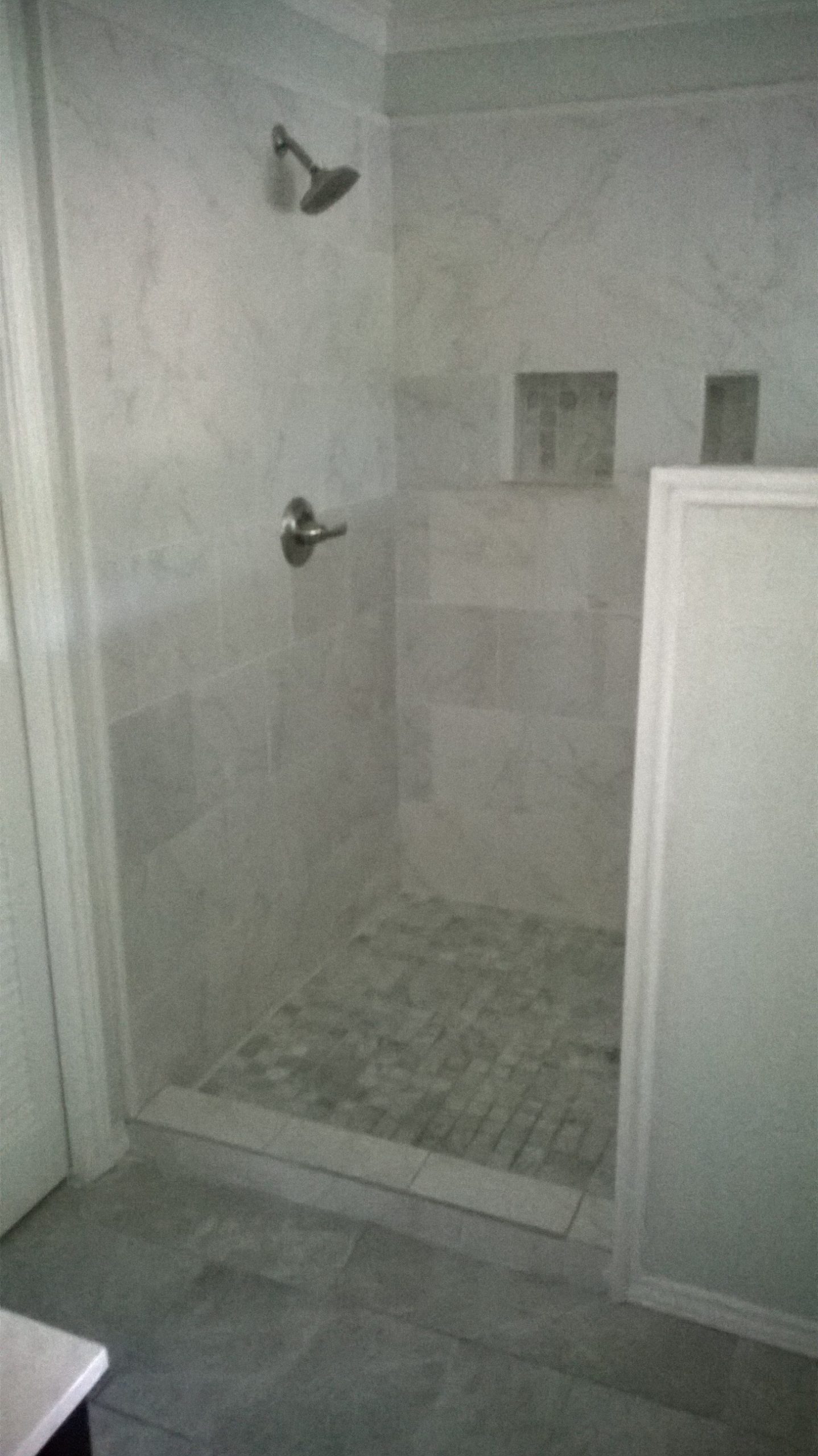
Converting a tub to a walk-in shower is one of the most common requests, and it changes the plumbing, the floor, and the waterproofing details. A custom tiled shower needs a properly built pan, wall waterproofing, a curb or curbless entry, and a niche or bench if you want one. A prefabricated insert is faster to set but offers fewer design options. A curbless shower looks seamless but requires careful floor work to slope the drain correctly.
Tile: material, size, and pattern
Tile is where much of the personality and a lot of the labor of a bathroom live. Porcelain, ceramic, natural stone, and glass each have different material costs, and each is installed differently. Large-format tile needs flatter surfaces. Small mosaics, herringbone, and other patterns need more cuts and more time. Heated floors, tile ceilings in the shower, and full-height wall tile all add area and detail. The tile you choose affects the labor as much as the price tag on the box.
Moving plumbing
If the toilet, tub, and vanity stay where they are, the plumber works with what is already in the walls. If you want a different layout, drain and supply lines have to be rerouted, and in a house built on a slab that can mean cutting into the concrete. Replacing old supply lines or shutoff valves while the walls are open is usually smart, and it is worth discussing.
Vanity, countertop, and fixtures
A stock vanity with an integrated top is a different line item from a custom cabinet with a stone countertop and an undermount sink. Faucets, shower valves, showerheads, towel bars, and mirrors range from simple to designer. Some finishes are ordered well ahead of installation, so make selections early to keep the schedule steady.
Ventilation, lighting, and electrical
A quiet exhaust fan that vents to the outside protects your new finishes from moisture. Lighting, outlets near the vanity, and ground-fault protection are standard in a bathroom and may require updating older wiring. Adding a heated floor, a lighted mirror, or a towel warmer means more electrical work.
The floor and what is under it
Bathrooms are prone to hidden moisture. When old tile and tub surrounds come out, it is not unusual to find soft subfloor or damaged framing from a slow leak. Repairing those items is part of doing the job correctly, and it is one reason a good estimate leaves room for findings. Our flooring guide explains more about how subfloor condition affects the result.
Accessibility and long-term plans
If you plan to stay in the house for a long time, features like a low-threshold shower, grab bar blocking inside the walls, wider doorways, and comfort-height fixtures are much easier to include during a remodel than to add later. Tell your contractor about your plans at the start.
Permits and living without a bathroom
Fort Worth requires a plumbing permit for work such as moving plumbing or replacing a shower pan, while replacing fixtures alone generally does not. Read our permit guide for details, and confirm with the city, because rules change. We pull city permits when a project needs them. Plan, too, for the days when the bathroom is unavailable, and ask your contractor about the schedule and whether you have another bathroom to use.
Getting an estimate that fits your bathroom
The best way to understand what your project involves is a walkthrough. Bring photos, a list of must-haves, and any fixtures you have already chosen. Our bathroom remodeling service covers tile work, fixtures, vanities, and full renovations, and our team works with trusted partner contractors across the metroplex. See our city pages for Fort Worth, North Richland Hills, Mansfield, and Grapevine, or browse all the areas we serve. To start, request a free quote or call 817-408-5624.
Frequently asked questions
What affects the cost of a bathroom remodel the most?
Scope and layout are the biggest drivers. A full gut with a new walk-in shower and relocated plumbing involves many more steps than replacing a vanity and fixtures. Tile choice, size, and condition of the subfloor come next.
Is converting a tub to a shower complicated?
It involves new plumbing connections, a different floor, and careful waterproofing, so it is more involved than swapping fixtures. The details depend on your bathroom and your house.
Do I need a permit for a bathroom remodel?
Often, yes, if plumbing, electrical, or walls change. Cosmetic work like new fixtures or tile generally does not require one, but city rules vary and change, so check with your city. We pull permits when needed.
Why can the cost change after demolition?
Because hidden conditions such as water damage or old framing can only be seen once the walls and floors are open. A clear estimate explains how those findings will be handled.
How do I get an estimate?
Use our free quote form or call 817-408-5624. Estimates are free.
Related guides
- What Affects the Cost of a Kitchen Remodel in Fort Worth
- Do I Need a Permit for a Remodel in Fort Worth or Arlington?
- Flooring Options for Texas Homes
- How to Choose a Remodeling Contractor in DFW
- Roof Repair vs. Replacement in North Texas
Ready to get started? Tell us about your project and get a free estimate.