North Texas roofs take a beating. Summer heat bakes shingles for months, spring storms bring wind and hail, and temperature swings stress every seam and fastener. At some point most homeowners face the same question: can this roof be repaired, or is it time to replace it? The answer depends on the roof’s age, its condition, and what is causing the problem. The Contractor INC handles roofing repair and replacement, and this guide explains how to think it through before you call anyone.
Ready to talk about your project? Estimates are free.

When repair makes sense
A repair is usually the right call when the problem is limited and the rest of the roof is in decent shape. Typical examples:
- A few shingles blown off, cracked, or lifted by a storm.
- Damaged flashing around a chimney, vent, skylight, or wall junction, which is a very common source of leaks.
- A localized leak traced to a single penetration or a small area.
- A small area of impact damage with sound decking underneath.
Repairs are most effective on roofs that still have meaningful life left. Replacing a few shingles on a roof with plenty of years ahead is often a sensible move. The key is finding the true source of the problem. Water travels, and a stain on a ceiling may be a long way from where it enters.
When replacement is the better choice
Replacement tends to make sense when the roof is near the end of its life or the damage is widespread. Signs include:
- Shingles that are curling, cupping, cracking, or losing their granules, which you may see collecting in gutters.
- Leaks in more than one place, or repairs that keep needing to be repeated.
- Soft or sagging areas, which can indicate damaged decking.
- Widespread hail or wind damage across several slopes.
- Daylight visible through the roof boards in the attic, or persistent moisture and mold in the attic.
- An age that is approaching the typical service life for your roofing material.
When many small repairs pile up, a new roof often becomes the more practical path, because you stop paying for patches and get a consistent system.
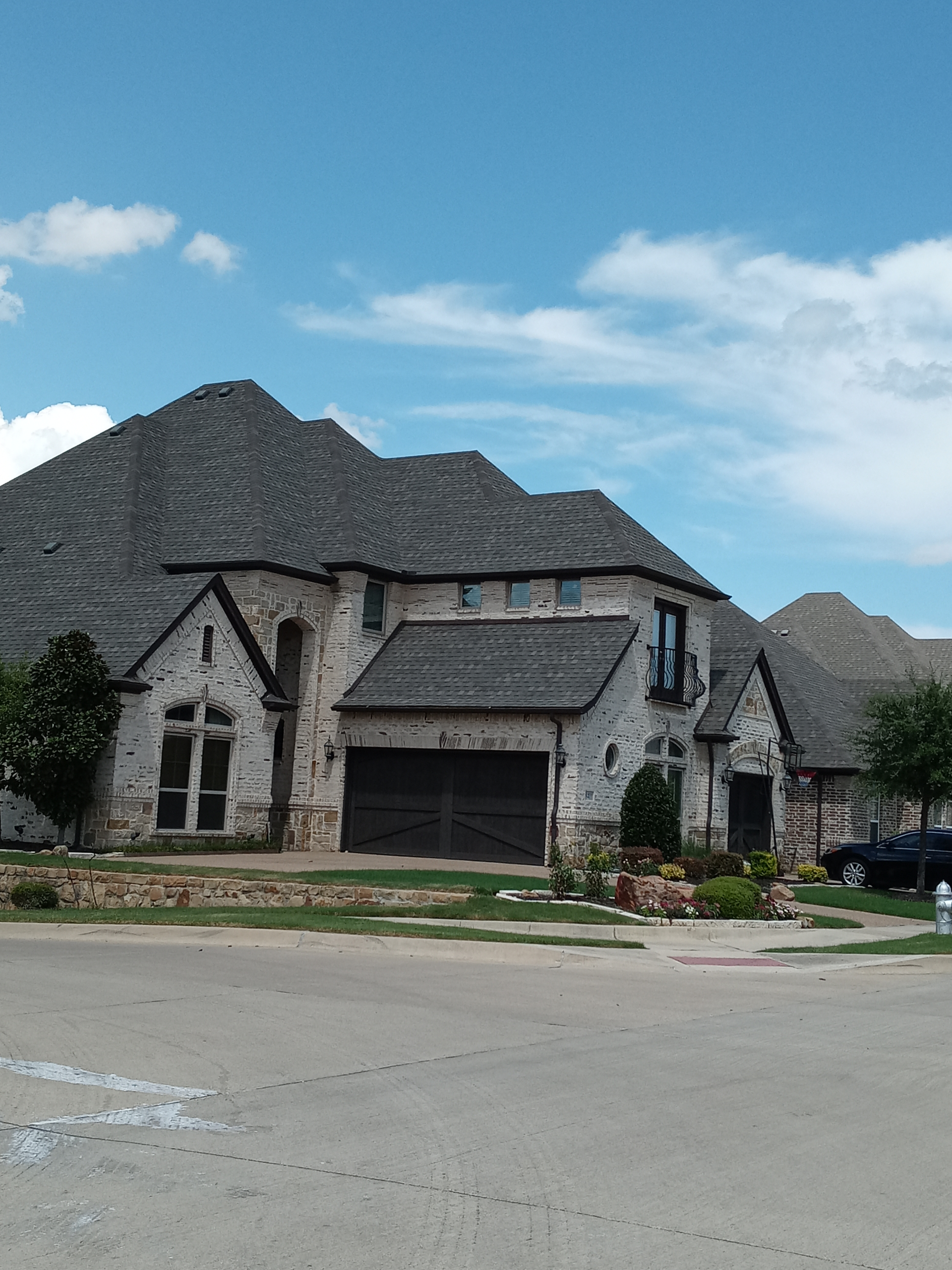
How hail changes the picture
Hail is a regular fact of life in the metroplex. Hail damage is not always obvious from the ground. Dents or bruises in shingles, missing granules, and damage to metal vents and gutters may show up only on close inspection. If you suspect a storm damaged your roof, document it with photos, then have it inspected by someone you trust. Check your homeowners policy and talk with your insurance company about how claims work, since deductibles and coverage terms vary. Compare more than one opinion before signing anything, especially if a stranger knocks on your door right after a storm. Our guide on how to choose a contractor covers other warning signs.
What affects the cost of repair or replacement
We do not post prices, because roofs are as varied as the houses beneath them. These are the factors that shape an estimate:
- Size and complexity: the square footage, the number of slopes, valleys, dormers, and penetrations.
- Pitch and access: steeper roofs require more safety equipment and time.
- Material: architectural shingles, impact-resistant shingles, metal, and other systems all differ in material and installation.
- Existing layers: tearing off one layer is different from several.
- Decking and framing: rotten or damaged boards must be replaced, and this is often discovered only once the old roofing is removed.
- Flashing, vents, and ventilation: proper details at edges and penetrations affect how long the roof performs.
- Disposal and cleanup: hauling away old material and protecting landscaping.
- Timing and weather: storms and busy seasons can affect scheduling.
Permits and rules
Roofing rules differ by city. The City of Fort Worth says replacing decking or sheathing requires a building permit, while shingle work does not, although there is a limit on shingle layers. Arlington’s list of work exempt from permitting includes replacing a small portion of roof covering. Local rules, historic districts, and homeowner association requirements can add steps. We pull city permits when a project needs them, and our permit guide links to the official city pages. Confirm the current rules with your city before work begins.
Questions to ask about any roof estimate
- What exactly is causing the problem, and how do you know?
- Is repair realistic, or only a short-term fix?
- What material and underlayment will be used, and why?
- How will rotten decking be handled if found?
- Who will do the work, and who handles permits?
- What is the plan for cleanup and for protecting my home during the job?
- What happens if I notice a problem after the work is done?
Related exterior work
Roof problems often show up alongside other exterior wear. If you are already working on the outside of the house, ask about siding repair and replacement, exterior painting, and fence repair at the same visit, since access and scheduling can overlap.
Get a straight answer on your roof
The only way to know whether your roof needs a repair or a replacement is to have someone look at it. Read about our roofing services, then request a free quote or call 817-408-5624. We serve homeowners across the metroplex, including Fort Worth, Arlington, Keller, and Azle. See all the areas we serve.
Frequently asked questions
How do I know if my roof needs repair or replacement?
Limited damage on a roof with years of life left usually points to repair. Widespread wear, repeated leaks, damaged decking, or age near the end of the material’s life usually point to replacement. An inspection gives you a real answer.
Can I tell if I have hail damage from the ground?
Not always. Some damage is visible only up close. Photograph what you can, and have the roof checked by a contractor you trust.
Does a roof replacement need a permit?
It depends on your city and the scope. Fort Worth requires a permit for replacing decking, while shingle-only work does not. Rules change, so confirm with your city. We pull permits when needed.
Why can the final scope change once the old roof is off?
Because decking and framing condition can be confirmed only when the old roofing is removed. A good estimate explains how that will be handled.
Do you offer free roofing estimates?
Yes. Request a free quote or call 817-408-5624.
Related guides
- What Affects the Cost of a Kitchen Remodel in Fort Worth
- Bathroom Remodel Cost Factors in DFW
- Do I Need a Permit for a Remodel in Fort Worth or Arlington?
- Flooring Options for Texas Homes
- How to Choose a Remodeling Contractor in DFW
Ready to get started? Tell us about your project and get a free estimate.